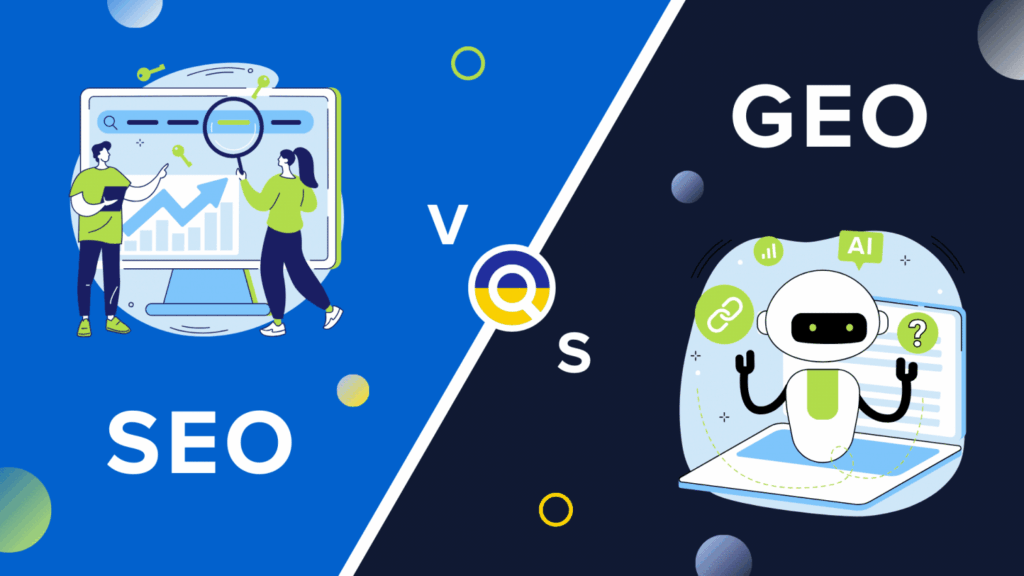
SEO vs GEO: Is Your Business Ready for the Age of AI Search?
SEO is changing. People are no longer just searching Google for answers — they’re asking AI. Here’s what businesses need to know about the next evolution of online visibility.
Imagine someone searching for a web design company in Kota Kinabalu.
A few years ago, they would probably open Google, type “web design company Kota Kinabalu,” and browse the first page of results.
Today, they might ask ChatGPT:
“Can you recommend a reliable web design company in Kota Kinabalu for a small business with a limited budget?”
Instead of receiving ten blue links, they may get a conversational answer, a shortlist of businesses, and links to selected websites.
This is where the difference between SEO and GEO becomes important.
If your business depends on people finding you online, understanding these two approaches could help you prepare for the future of search.
1. What Is SEO?
SEO stands for Search Engine Optimization.
It is the process of improving your website so that search engines like Google can discover, understand, and rank your content.
Traditional SEO focuses on several important areas:
- Keywords: Understanding what people search for.
- Content: Publishing useful, relevant information.
- Technical SEO: Making sure your website loads properly and can be crawled and indexed.
- Backlinks: Earning links from other relevant and trustworthy websites.
- User experience: Making your website easy to navigate and use.
The goal is to improve your visibility in search results, attract relevant visitors, and ultimately generate enquiries or sales.
For example, a florist in Sabah might create a page targeting “flower delivery Kota Kinabalu” to reach customers looking for flowers in that area.
SEO remains an important foundation for online marketing.
But search behaviour is evolving.
2. What Is GEO?
GEO stands for Generative Engine Optimization.
While SEO helps your website appear in search engine results, GEO focuses on increasing the chances that your business, website, or content will be mentioned or cited in AI-generated answers.
These experiences can include AI-powered search engines and assistants such as ChatGPT, Google AI Overviews, and other generative search tools.
Think about the difference.
Traditional search:
“Best florist in Kota Kinabalu”
The user receives a list of websites and business listings.
AI-powered search:
“Which florist in Kota Kinabalu is suitable for a wedding, and what should I consider when choosing one?”
The AI may provide a summary of relevant factors, compare available options, and cite sources it considers useful.
The important question for businesses is no longer just whether your website ranks on Google.
It is also whether your business is visible when people ask AI for recommendations, comparisons, and advice.
Of course, appearing in an AI answer is never guaranteed. Different tools can produce different answers, and their sources can change.
3. SEO vs GEO: What’s the Difference?
Although they share many principles, SEO and GEO measure online visibility differently.
| Area | SEO | GEO |
|---|---|---|
| Main objective | Improve visibility in search results | Increase visibility in AI-generated answers |
| Typical result | A ranked list of websites | A conversational answer with possible brand mentions and citations |
| Content approach | Match search intent and relevant keywords | Answer questions clearly and provide useful, well-supported information |
| Visibility measurement | Rankings, impressions, clicks and organic traffic | Brand mentions, citations, source visibility and share of relevant AI responses |
| User journey | Often involves clicking through search results | May end with an AI answer or continue to a cited website |
| Competition | Competing for search positions | Competing to be included as a useful, credible source |
One major difference is that a traditional search ranking and an AI recommendation are not the same thing.
A website may rank well for a keyword without being mentioned in a particular AI response. Equally, an AI tool may cite a relevant source that is not the first result for the user’s original search.
That means businesses need to understand both forms of visibility.
4. Does GEO Mean Traditional SEO Is Dead?
Absolutely not.
One of the most important points in DataForSEO’s article is that SEO and GEO share fundamental principles.
AI-powered search tools may retrieve information from websites, search indexes, and other online sources. If your website is difficult to access, poorly structured, or lacking useful information, it may be harder for these systems to use your content.
That is why the basics still matter.
A strong SEO foundation supports your GEO efforts.
Your website should:
- Load quickly and work well on mobile devices.
- Allow search engines to crawl and index important pages.
- Use clear headings and logical content structure.
- Provide accurate information about your products and services.
- Demonstrate relevant expertise and credibility.
- Keep business details consistent across your website and other online platforms.
There is little value in chasing AI visibility while neglecting the quality of your actual website.
Instead of treating SEO and GEO as competing strategies, businesses should see them as two connected parts of a broader digital visibility strategy.
5. The Biggest Shift: Stop Writing Only for Keywords
Traditional SEO often starts with keyword research.
For example, a company might target phrases such as:
- Web design Malaysia
- Affordable website development
- SEO services Kota Kinabalu
- Best web design company Sabah
These keywords remain useful.
However, AI-powered search often involves longer, more specific questions that reflect what a person actually wants to know.
For example:
- How much does a small business website cost in Malaysia?
- Do I need a website if my business already has a Facebook page?
- How can a local business get more enquiries from Google?
- What should I look for before hiring an SEO agency?
These questions reveal the user’s concerns, expectations, and decision-making process.
A useful content strategy should address those concerns directly.
Instead of publishing a short page filled with keywords, create a genuinely helpful article that explains the issue, compares possible solutions, gives practical examples, and answers common follow-up questions.
A good structure might look like this:
Question: How much does a small business website cost?
Direct answer: The cost depends on the number of pages, design requirements, functionality, content preparation, and ongoing maintenance.
Further explanation: Explain the difference between a simple business website and a customised e-commerce platform.
Practical advice: Give readers a checklist of questions to ask before hiring a web designer.
This approach serves human readers first while making the information easier to understand and reference.
The goal is not to abandon keywords. It is to combine keyword research with comprehensive answers to real customer questions.
6. Authority Matters More Than Simply Publishing More Content
Publishing dozens of blog posts does not automatically make a business trustworthy.
For both SEO and GEO, the quality and credibility of information matter.
Businesses should aim to build a consistent online presence that clearly communicates who they are, what they do, and why customers should trust them.
Here are five practical ways to strengthen that presence.
1. Demonstrate real experience
Publish case studies, project examples, original research, and lessons learned from actual work.
For example, a web design agency could explain how it improved a client’s website navigation or helped a business generate more qualified enquiries. Only publish results that can be substantiated.
2. Be specific
Generic statements such as “We provide the best services” tell readers very little.
Explain your process, expertise, service area, pricing considerations, and the types of customers you serve.
3. Maintain consistent business information
Keep your company name, contact details, services, and location accurate across your website and relevant business profiles.
4. Build a credible reputation
Relevant industry mentions, genuine customer reviews, partnerships, and useful contributions to reputable publications can help establish credibility.
5. Make important information easy to understand
Use descriptive headings, concise explanations, clear service pages, and structured information where appropriate.
Remember: there is no single trick that guarantees an AI system will recommend your business. GEO is about improving your chances of being understood, trusted, and selected as a relevant source.
7. How Do You Measure GEO Success?
This is where things become more interesting.
With traditional SEO, website owners can monitor metrics such as keyword positions, impressions, clicks, and organic traffic using tools like Google Search Console and Google Analytics.
GEO requires an additional set of measurements.
Consider tracking:
- Brand mentions: How often does your business appear in relevant AI-generated answers?
- Citations: Does the AI link to your website as a source?
- Competitor visibility: Which competitors appear in answers where your business does not?
- Topic coverage: For which questions or subjects is your brand being mentioned?
- Business outcomes: Are visitors, enquiries, and conversions increasing?
AI responses can vary by platform, prompt, location, and time. A single test is therefore not enough to establish a reliable trend.
A more useful approach is to create a consistent set of relevant customer questions and test them periodically across the AI tools that matter to your audience.
For example, a local web design agency might monitor questions such as:
- Who provides web design services in Kota Kinabalu?
- What should a Sabah business look for in an SEO agency?
- Which website platforms are suitable for Malaysian small businesses?
Record the answers, cited sources, brand mentions, and competing businesses. Over time, this can help identify content gaps and opportunities.
One important warning: AI visibility is not the same as revenue. A brand mention is useful, but qualified enquiries and sales remain essential measures of business performance.
8. A Simple SEO + GEO Strategy for Small Businesses
You do not need an enormous marketing budget to start improving your visibility.
Begin with the assets you already have.
Step 1: Fix your website foundations
Check mobile usability, page speed, indexing, broken links, navigation, and the clarity of your service pages.
Step 2: Understand your customers’ questions
Look at enquiries, sales conversations, customer reviews, search queries, and frequently asked questions.
Step 3: Improve your existing content
Update outdated articles, add missing explanations, include practical examples, and make your service information more specific.
Step 4: Publish genuinely useful resources
Create guides that help customers solve problems or make informed purchasing decisions. Avoid publishing repetitive articles simply to increase content volume.
Step 5: Strengthen your online reputation
Encourage genuine customer reviews, maintain accurate business listings, and build relationships with relevant organisations and publications.
Step 6: Monitor both SEO and GEO
Track traditional search performance alongside AI mentions, citations, referral traffic, enquiries, and conversions.
Step 7: Refine your strategy
Identify which pages attract visitors, which questions are not being answered, and where competitors are more visible. Improve your content based on evidence rather than assumptions.
The best strategy is not necessarily the most complicated one. It is the one you can execute consistently and measure meaningfully.
Conclusion: The Future Belongs to Businesses That Are Easy to Find and Trust
The evolution from traditional search to AI-powered discovery does not mean everything we know about SEO has become irrelevant.
The fundamentals remain familiar: useful content, accessible websites, relevant information, and credibility.
What is changing is how people discover information and how businesses need to measure their visibility.
A company may rank in Google, appear in an AI-generated answer, receive a direct website visit, or influence a customer’s decision without earning a click at all.
That is why modern digital marketing needs a broader perspective.
SEO helps people discover your website. GEO helps improve the chances that AI systems will discover, understand, and reference your content. Both can contribute to your business’s online visibility.
The real opportunity is not to chase every new marketing acronym. It is to build a website and online presence that genuinely deserve to be found, recommended, and trusted.
Because in the age of AI search, being online is only the beginning. Being useful and credible is what gives your business a better chance of standing out.
Source and further reading
This article is an original, simplified interpretation of the key ideas discussed in DataForSEO’s article, SEO vs GEO: Key Differences and Shared Principles in Data and Optimization, published on 18 November 2025.
Original article: https://dataforseo.com/blog/seo-vs-geo-key-differences-and-shared-principles-in-data-and-optimization
Editorial note: SEO and GEO are evolving fields. Results vary across search engines and AI platforms, and no optimization method guarantees rankings, mentions, or citations.